
FilmLune · AI generator and gallery
Curated prompts | Create AI images & videos with ease
Understand FilmLune
FilmLune combines an AI image generator with a gallery of image and video examples. Each detail shows the result, available prompt, declared model, and a method you can adapt.
Explore all promptsA readable method
Two ways in
Start with an image example for a still composition, or a video example to study motion, inputs, and duration. Both libraries lead to the same canonical case details.
Useful boundaries
Models and settings describe the visible revision: FilmLune does not silently replace a model during handoff. External work keeps its attribution and source link on the detail page.
Only when that revision’s rights permit it. The detail then preserves the prompt and its provenance; an unavailable action is never replaced with invented content.
No. Model versions, inputs, and settings can change the output. Use the method as a starting point and check the parameters before generating.
 SpringWangGPT Image 2.5
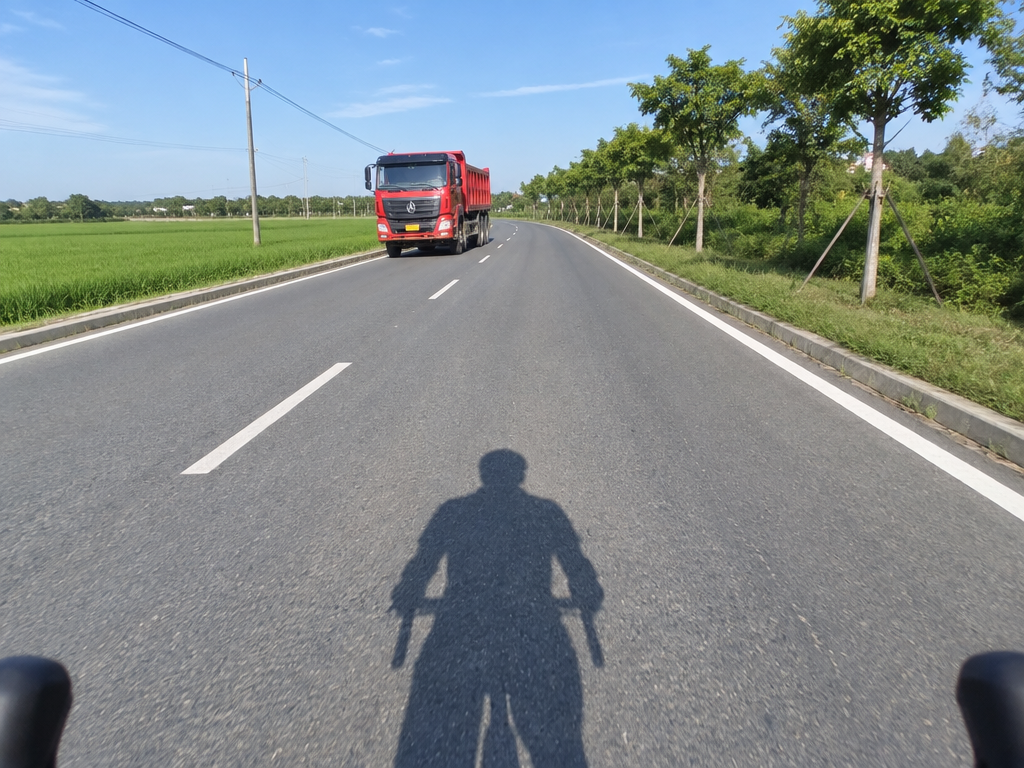
Create one photorealistic 4:3 landscape image as the opening frame of a playful, physically impossible cycling POV video. It should look like an ordinary frame from a cyclist’s wide-angle action camera, not a cinematic poster.
CAMERA AND COMPOSITION:
First-person viewpoint from a camera mounted on an adult cyclist, looking straight ahead along a broad, gently curving rural asphalt road. Keep the horizon in the upper third, with a large stretch of sunlit road filling the foreground. Only the small black ends of the bicycle’s handlebars are visible at the extreme bottom-left and bottom-right edges.
The cyclist is behind the camera. Their head, torso and face are not directly visible. Strong sunlight from behind the cyclist casts a clear, elongated cycling shadow onto the road, centered in the lower half of the image. The shadow shows a rounded head, shoulders, torso and arms reaching toward the handlebars. This is a real shadow lying flat on the asphalt, not a separate black person riding ahead.
TRUCK:
A large red dump truck approaches from the distance, positioned near the upper center, slightly left of center as it follows the bend. It is approximately 35–40 meters away, small enough to leave a long, unobstructed stretch of road between the camera and the truck.
The truck faces the camera. It has a modern flat-front red cab, a broad dark windshield, large side mirrors, a wide black grille, angular headlights, a small yellow front license plate and a long red ribbed dump bed behind the cab. Its wheels rest naturally on the road. The vehicle is intact and moving normally at this opening moment.
ENVIRONMENT:
Smooth gray asphalt with white lane markings and white edge lines. Low concrete curbs along the road. Green agricultural fields on the left, with slender utility poles and overhead wires. Rows of leafy trees and a grassy verge on the right, including young roadside trees supported by stakes. Clear blue sky with a few thin clouds. Bright natural daylight, believable colors, slight wide-angle lens distortion and everyday action-camera realism.
The opening moment is calm. No raised foot yet, no dust cloud and no skid marks. No additional cyclist in front of the camera. No captions, watermark, playback controls or video-player interface.A 4:3 image prompt that recreates the opening frame of a first-person cycling video: a wide view of a rural road, a crisp cyclist shadow cast on the asphalt, and a red dump truck approaching in the distance, setting up a deliberately physically impossible video sequence.
Image prompts and examplesThis prompt generates the starting image of a playful first-person cycling sequence. The goal is not a dramatic poster but a frame that reads as an ordinary shot from a wide-angle action camera, so that the impossible moment introduced later feels more convincing. The scene must stay calm at this stage: the cyclist rides normally, the truck is intact and still far away, and no drama is visible yet.
1. Set a 4:3 landscape format and request a photorealistic render that evokes a mounted wide-angle action camera, with slight lens distortion. 2. Establish the viewpoint: the cyclist looking straight ahead along a broad, gently curving rural road, with the horizon in the upper third and a long stretch of sunlit road filling the foreground. 3. Suggest the cyclist only through details: the small black handlebar ends at the bottom-left and bottom-right edges, with head and torso out of frame behind the camera. 4. Have the model render an elongated cyclist shadow centered in the lower half: rounded head, shoulders, torso and arms reaching toward the handlebars, with the explicit note that it is a real shadow lying flat on the asphalt, not a black figure riding ahead. 5. Describe the red dump truck about 35 to 40 meters away, slightly left of center: a modern flat-front red cab, broad dark windshield, large side mirrors, a wide black grille, angular headlights, a small yellow front plate and a long red ribbed dump bed behind the cab. 6. Specify the environment: gray asphalt with white center and edge lines, low concrete curbs, green farm fields and utility poles with wires on the left, leafy trees and a grassy verge with staked young trees on the right, and a clear blue sky with thin clouds. 7. Lock the moment: bright natural daylight and believable colors, no raised foot, no dust cloud, no skid marks, no second cyclist in front of the camera, and no captions, watermarks, playback controls or video-player interface.
This is a still image, not the video itself: the 4:3 format and the image model define the output, and no duration is attached. The exact pose of the shadow and fine truck details (plate lettering, headlight shapes) can vary between generations and often need several attempts. Wide-angle distortion and the action-camera feel depend heavily on the model used and are not guaranteed.