
FilmLune · AI generator and gallery
Curated prompts | Create AI images & videos with ease
Understand FilmLune
FilmLune combines an AI image generator with a gallery of image and video examples. Each detail shows the result, available prompt, declared model, and a method you can adapt.
Explore all promptsA readable method
Two ways in
Start with an image example for a still composition, or a video example to study motion, inputs, and duration. Both libraries lead to the same canonical case details.
Useful boundaries
Models and settings describe the visible revision: FilmLune does not silently replace a model during handoff. External work keeps its attribution and source link on the detail page.
Only when that revision’s rights permit it. The detail then preserves the prompt and its provenance; an unavailable action is never replaced with invented content.
No. Model versions, inputs, and settings can change the output. Use the method as a starting point and check the parameters before generating.
 SpringWangGPT Image 2.5
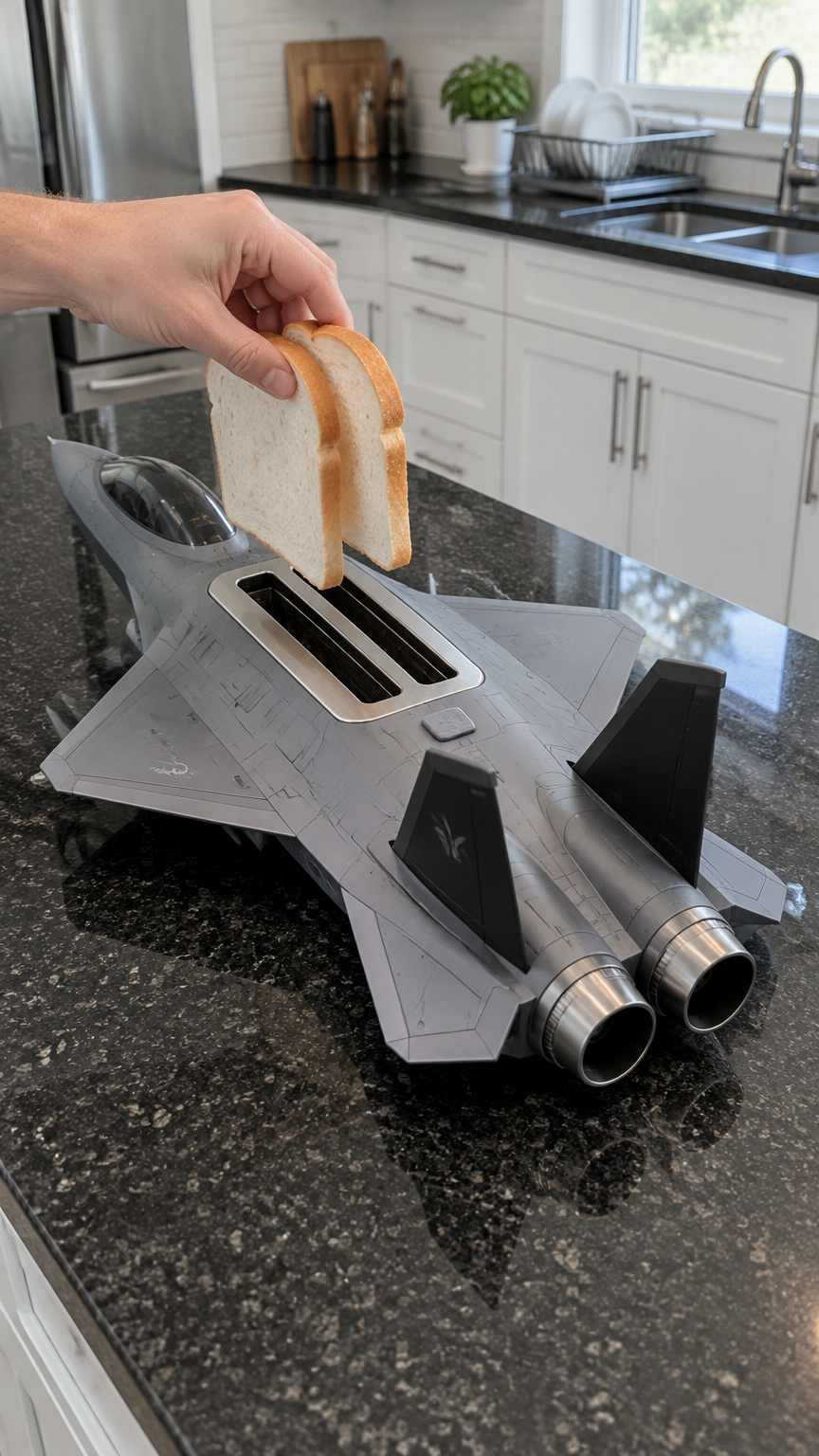
Create one 9:16 vertical image in a realistic smartphone-photo style as the opening frame of a playful short video. Show only one complete kitchen scene.
A detailed aircraft-inspired toaster sits on a dark polished granite kitchen island with fine light speckles. It is a creative countertop kitchen appliance whose shape resembles a sleek twin-tail jet aircraft, but it is clearly a household toaster.
The appliance is about 55 cm long, with a matte gray metallic body, subtle panel lines, and realistic mechanical detailing. It has a long narrow nose, a dark transparent canopy section at the front, wide swept wings, two black vertical tail fins, and two round metal nozzles at the rear. The overall silhouette is low, wide, and streamlined, like a carefully made physical appliance.
Most important structure:
Directly behind the transparent front canopy section, centered between the wings, there is a low-profile brushed stainless-steel rectangular toaster panel built into the top of the body. Inside this panel are exactly two parallel narrow bread slots. The slots run from front to back and sit side by side, each sized for one normal slice of bread. The panel should feel naturally integrated into the appliance body.
Both slots are currently empty and dark inside.
Near the front canopy area, there is a small pressable start button. The button is currently off and not glowing.
Camera and composition:
The camera is positioned beside the kitchen island in a slightly elevated three-quarter rear view. The nose points toward the upper left of the frame, and the two rear nozzles point toward the lower right.
Clearly show the front canopy area, the two bread slots, the wings, the two tail fins, and the two rear nozzles in the same frame.
The appliance is fully visible and not cropped.
An adult right hand enters from the left side of the frame, holding two ordinary slices of white sandwich bread. The slices are pale and untoasted, with light golden crusts and slightly rounded tops.
The two slices are held upright and parallel, each aligned above one of the two bread slots, hovering just above the openings, about to be inserted together.
Show only this one hand and a small part of the forearm, with no visible face or body.
The background is a clean, real modern kitchen with white cabinet doors, slim silver handles, a dark countertop, and a dish rack and sink in the distance. Natural daylight. The background can be slightly soft, while the appliance, hand, and bread remain sharp.
This is the moment before activation. The appliance is off. The front indicator area is unlit, the bread slots are not glowing, and the rear nozzles are dark.
No subtitles, no watermark, no player interface, no collage, and no poster layout.A twin-tail jet-shaped toaster sits on a dark granite island, shot like a casual smartphone photo at the moment before two slices of bread are inserted.
Image prompts and examplesProduce the opening frame of a playful short video: a vertical 9:16 image in realistic smartphone-photo style that shows a believable kitchen scene built around one absurd-but-convincing object — a household toaster styled after a sleek twin-tail jet aircraft.
Generate a single complete kitchen scene with GPT Image 2.5 at 9:16. The appliance is about 55 cm long, with a matte gray metallic body, subtle panel lines, a long narrow nose, a dark transparent canopy at the front, wide swept wings, two black vertical tail fins, and two round metal nozzles at the rear. Directly behind the canopy, centered between the wings, a low-profile brushed stainless-steel rectangular panel is built into the top of the body and holds exactly two parallel front-to-back bread slots sized for normal slices — both empty and dark inside. A small start button near the canopy stays off and unlit. The camera sits beside the island in a slightly elevated three-quarter rear view, nose pointing to the upper left and nozzles to the lower right, with canopy, slots, wings, tail fins, and nozzles all visible and uncropped. An adult right hand enters from the left holding two ordinary slices of white sandwich bread, pale and untoasted with light golden crusts, held upright and parallel above the slots, about to be inserted together; only the hand and a small part of the forearm appear. The background is a clean modern kitchen with white cabinet doors, slim silver handles, a dark countertop, and a distant dish rack and sink in natural daylight, slightly soft while the appliance, hand, and bread stay sharp.
This is a single generated image from GPT Image 2.5 in 9:16; no duration or motion is attached to this recipe. The output is an interpretation: exact slot integration into the body and convincing hand anatomy may take several attempts. No seamless loop is requested or implied.